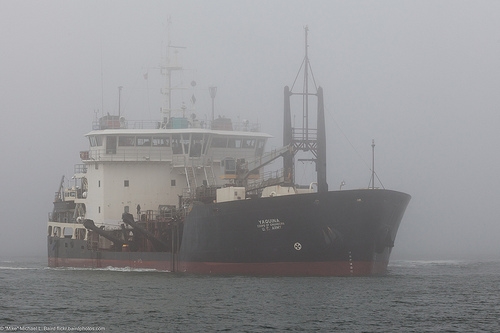
AIS (Automatic Identification System) is a useful aid to navigation that helps you see and identify other vessels around you.
An AIS receiver allows your boat to pick up signals from AIS-equipped ships and display their position, course, and speed. It is mainly used to improve awareness of surrounding traffic and to help with collision avoidance.
AIS and radar
AIS is similar to radar, but it is not the same. It cannot “see” land, weather, or boats that are not transmitting AIS, so it should always be used alongside a proper visual lookout and other navigation equipment.
Transmitting information
Large commercial ships and all passenger vessels are required to carry AIS transmitters. These vessels send information on two dedicated VHF channels, known as AIS Channels 87B and 88B. The data includes the ship’s position, course, speed, true heading, rate of turn, and its Maritime Mobile Service Identity number (MMSI), which is a unique nine-digit identification number.
When a ship is under way, this information is normally transmitted every 2 to 10 seconds, depending on speed, and about every three minutes when the ship is at anchor.
Additional details such as the vessel’s name, call sign, type, size, draught, destination, and estimated time of arrival are sent at longer intervals. This information is entered by the ship’s crew, so its accuracy depends on how carefully it is maintained.
Single or dual channel?
AIS messages are sent alternately on two channels to reduce interference. AIS receivers for leisure boats are either single-channel or dual-channel. Single-channel receivers are usually perfectly adequate for sailing yachts and slower boats.
Faster motorboats, especially those capable of more than 20 knots, may benefit from a dual-channel receiver, which collects information more quickly.
With a good VHF antenna, AIS receivers typically pick up large ships (Class A AIS) at ranges of around 12 to 15 nautical miles or more. Smaller boats usually use Class B AIS, which transmits at lower power and is received over shorter distances.
Benefits of AIS for beginners
You can see what ships are around you and where they are heading.
You can identify vessels by name and call them directly on the VHF radio.
You can judge collision risk by watching whether another vessel stays on a constant bearing while getting closer.
AIS uses very little electrical power compared to radar, making it ideal for small and sailing boats.
⚓ This information is for general guidance only. AIS is an aid to navigation and must not replace proper lookout, COLREG compliance, or other navigational equipment. The author accepts no liability for any loss or damage arising from its use.
This article was first published on 5 December 2011