The bowline's name comes from the “bow line,” a rope on square-rigged ships used to hold the front edge of a square sail taut.
Sailors often use the bowline for everything from securing a boat to a pontoon to joining two ropes (with two bowlines).
While there are better knots for certain jobs – like a round turn and two half hitches, which can be released under load – the bowline is unbeatable when you need a loop that won’t slip or tighten on itself, yet can be untied easily.
Tying the Bowline
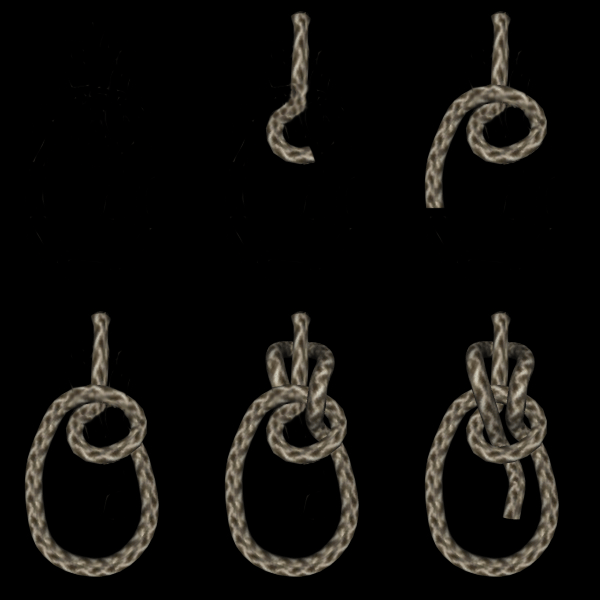
Thanks to Mark Rosenstein of apparent-wind.com for preparing the excellent animation
One of the easiest ways to remember it is the “rabbit and the tree” method:
The tree is the standing part of the rope.
Form a small loop at the base of the tree—this is the “hole.”
The “rabbit” (the rope’s bitter end) comes up through the hole.
The rabbit runs around the back of the tree.
Finally, the rabbit goes back down through the hole. Pull tight, and you’re done!

Pro Tip: If you need a larger loop – for example, to fit around a big bollard – pass your hand through the bowline loop up to your elbow, grab the standing part, and pull it through to create a bigger loop.
Watch: Learn to tie the Bowline Knot
This article was first published on 17 May 2010